
Metal Stud vs Wood Framing: Which to Use and When
Metal stud vs wood framing compared, fire rating, moisture, cost, and where light-gauge steel beats lumber. A practical guide for GTA builds.
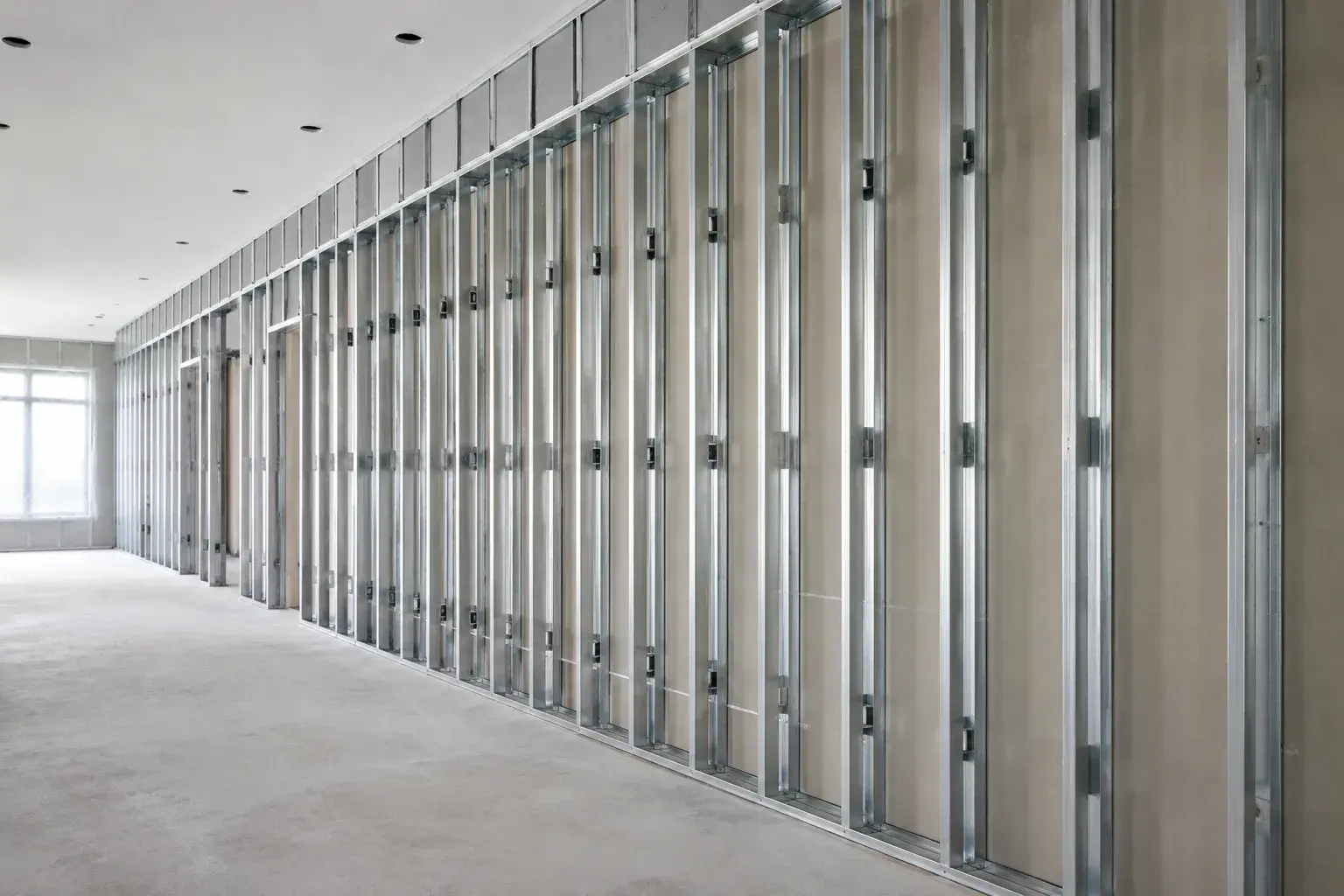
Wood is usually the practical choice for low-rise residential structure, while light-gauge metal studs are often better for straight non-load-bearing partitions, commercial interiors, and assemblies designed as noncombustible construction. The correct answer depends on load, fire-resistance design, moisture exposure, acoustics, insulation, fastening needs, trade coordination, and the approved architectural and structural drawings.
What is the difference between metal stud and wood framing?
Wood framing uses dimensional lumber or engineered wood joined with common connectors. It is familiar across Ontario housing and suits walls, floors, roofs, beams, and openings.
Metal stud framing usually means cold-formed, light-gauge steel studs installed in matching top and bottom track. The stud depth, flange width, thickness, coating, spacing, and bracing vary by system. Interior drywall partitions often use lighter members than load-bearing exterior walls. The fact that two studs look similar does not mean they have the same capacity.
Which framing material is better by category?
| Decision factor | Wood framing | Metal stud framing |
|---|---|---|
| Typical residential use | Structural walls, floors, roofs, additions, and partitions | Interior partitions and selected engineered exterior systems |
| Straightness | Can crown, twist, shrink, or vary with moisture | Consistent dimensions and straight long runs |
| Site cutting | Familiar saws and fastening methods | Snips, saws, screws, crimpers, and system-specific tools |
| Structural capacity | Strong and efficient for low-rise housing | Depends heavily on gauge, profile, spacing, bracing, and engineering |
| Combustibility | Combustible material | Noncombustible steel, but the complete wall rating still depends on the full assembly |
| Thermal bridging | Lower conductivity than steel | High conductivity requires careful exterior thermal design |
| Moisture | Can rot or support mould when persistently wet | Does not rot, but coatings, cut edges, and corrosion exposure still matter |
| Fastening finishes | Easy to add wood blocking and attach millwork | Often needs planned backing or rated anchors |
| Waste and recycling | Offcuts can often be reused; wood is renewable when responsibly sourced | Steel is recyclable and consistent, but offcuts are sharp and need sorting |
| Best fit | Houses, additions, roof and floor systems | Commercial interiors, bulkheads, demising walls, and exact partition layouts |
This is not a claim that one material is universally superior. The table shows why many GTA projects use both. Wood can carry the house, while steel creates clean interior partitions or service zones where its characteristics solve a specific problem.
When does wood framing make more sense?
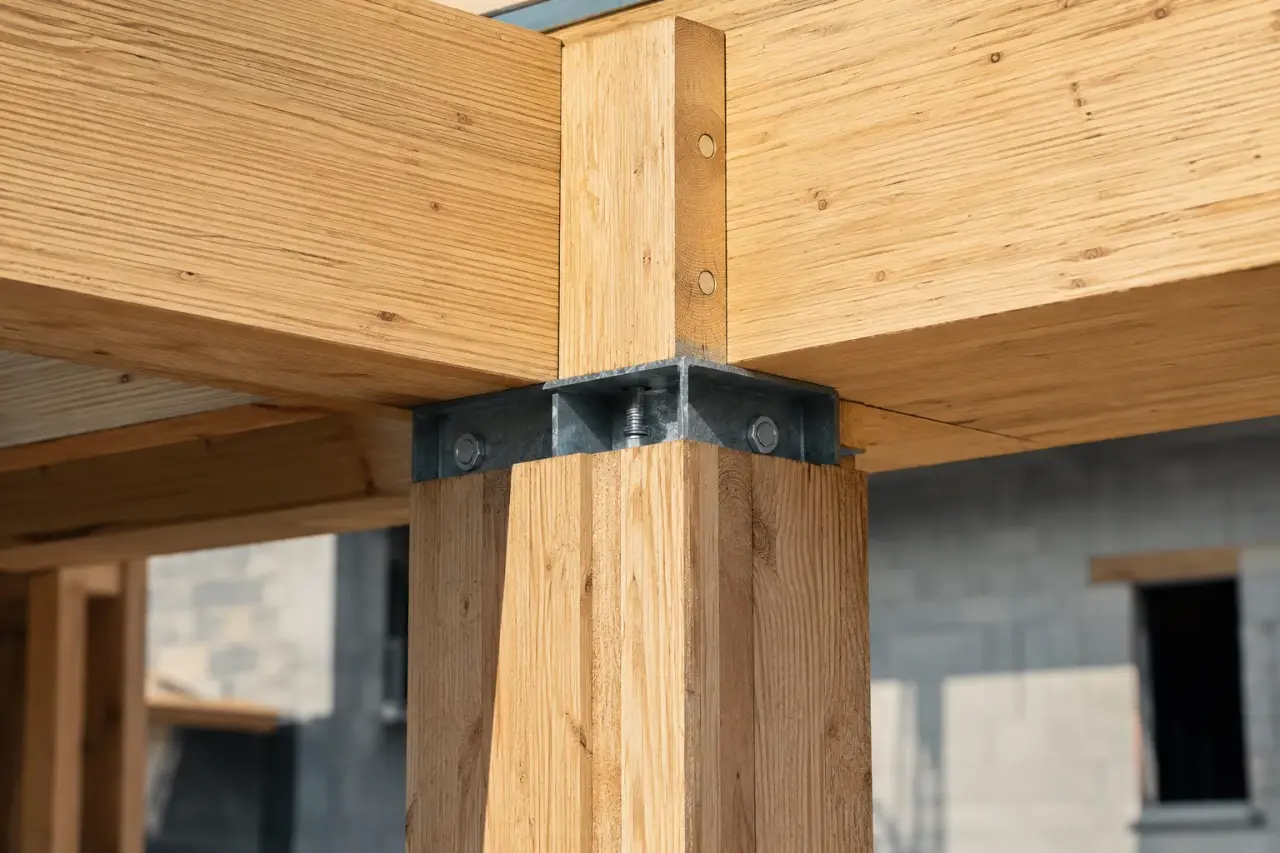
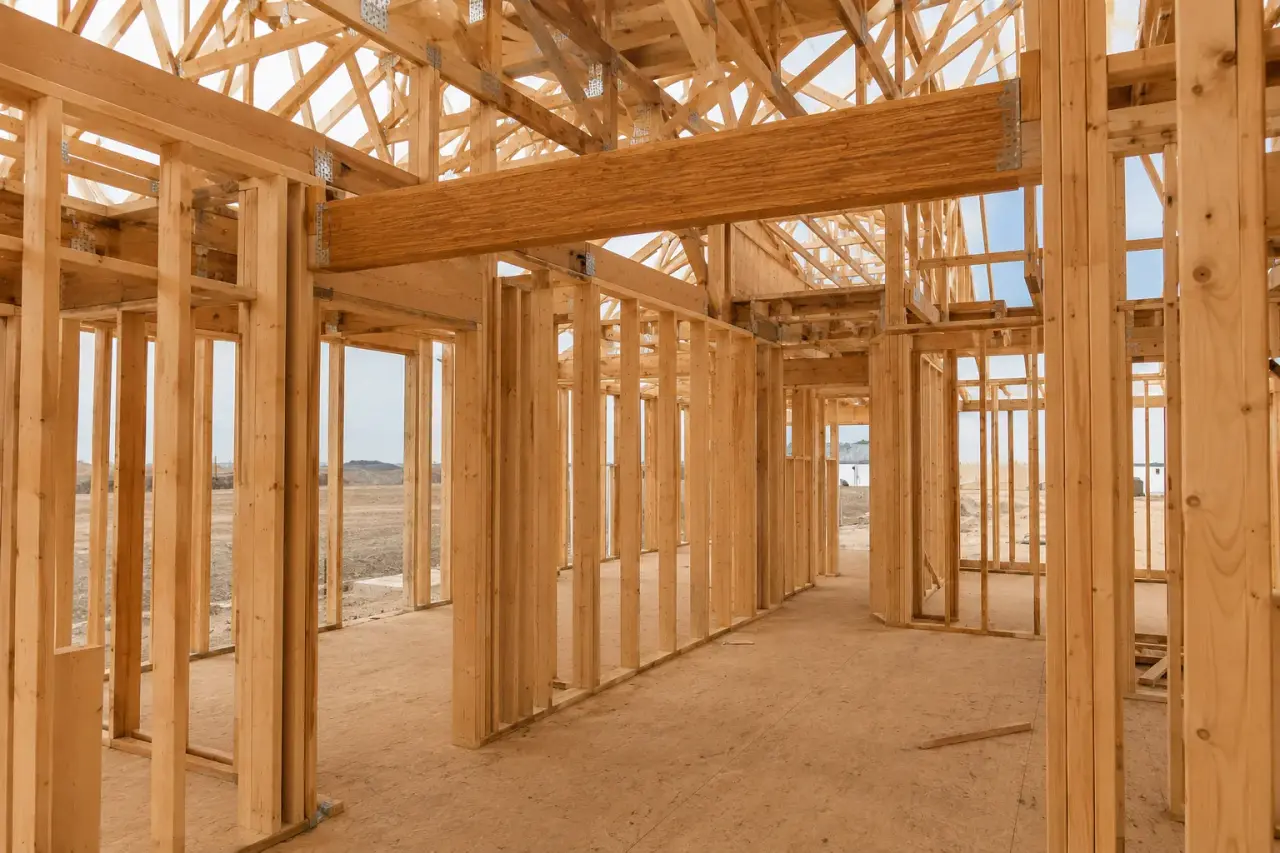
Wood remains the default for most custom home framing because span tables, engineered products, trusses, sheathing, connectors, insulation methods, and trade practices all support it. In additions, wood also ties naturally into an existing wood structure when the connection follows approved details.
Wood blocking is easy to place for cabinets, grab bars, handrails, stone, or heavy fixtures. Plan those loads before drywall.
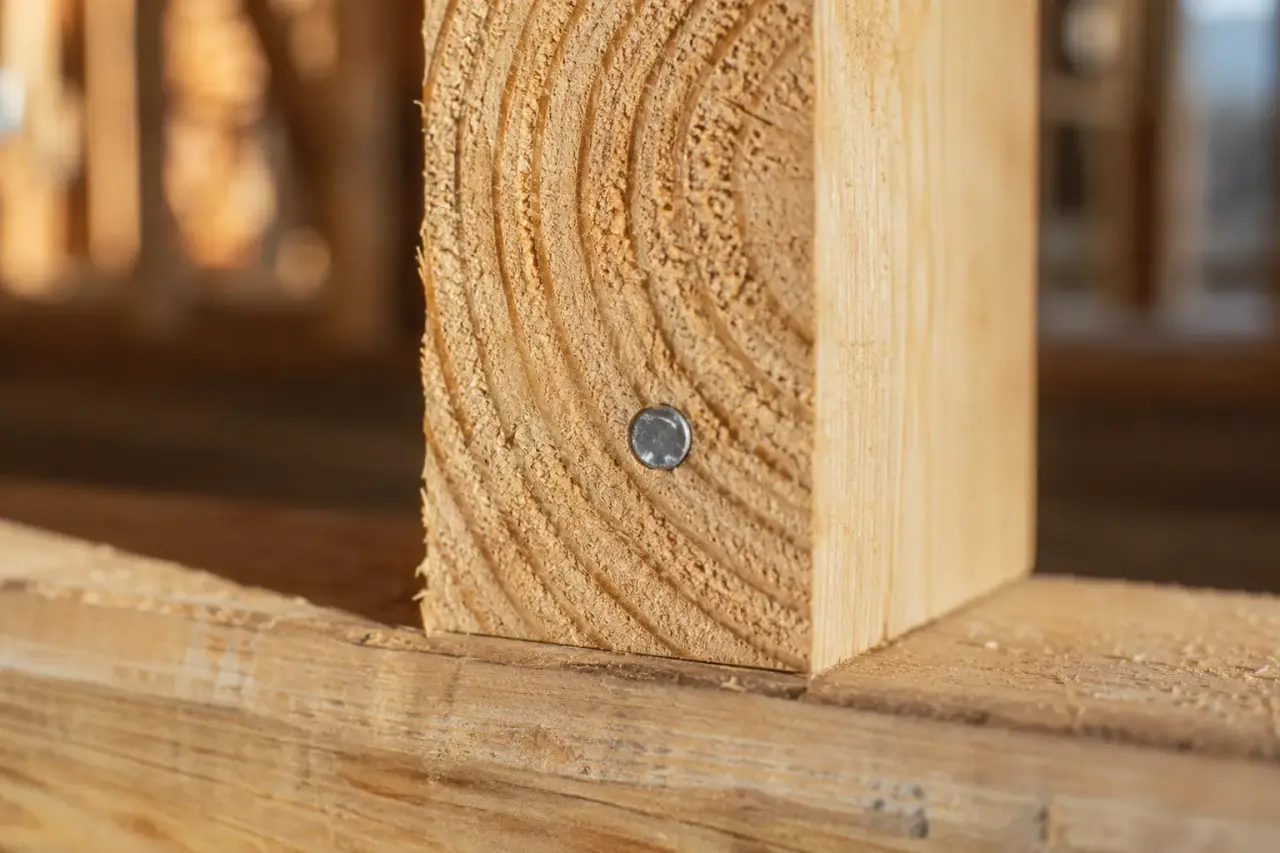
Lumber can arrive wet, crowned, bowed, or twisted, and it can shrink as it dries. Good framing includes material selection, alignment, bracing, and weather protection.
When does metal stud framing make more sense?
Light-gauge metal stud framing earns its place in long, straight partitions, commercial tenant improvements, basements, soffits, shafts, and multi-unit interiors. Steel studs are consistent and light to handle, while track makes repeated walls efficient to lay out.
Commercial interiors often use tested metal-stud assemblies. On a commercial framing project, wall height, deflection track, bracing, backing, door frames, shafts, and acoustic seals may matter more than stud price.
Steel does not rot and is not food for termites, but it is not immune to moisture problems. Prolonged exposure and damaged protective coating can lead to corrosion. A basement wall still needs a sound moisture and insulation strategy. Replacing wood studs with steel does not fix a wet foundation.
Is metal framing always more fire resistant?
Steel is noncombustible, but a stud alone does not create a fire-resistance rating. Ratings apply to complete tested or code-compliant assemblies, including stud size and spacing, gypsum type and layers, insulation, resilient components, fasteners, joints, penetrations, fire stopping, and continuity at floors and ceilings. A poorly detailed metal wall can fail its required performance just as a wood assembly can.
Ontario’s current Building Code page says the 2024 Building Code Compendium is the governing edition and identifies January 16, 2025 as the most recent compendium filing. The page was updated July 15, 2026 and reminds users to confirm that they have the latest version. Source: Government of Ontario, Ontario’s Building Code, updated July 15, 2026.
The Code allows both approaches in defined circumstances. Occupancy, area, height, sprinklering, spatial separation, and the compliance path affect what is permitted. The designer selects the assembly for the actual building.
Is metal or wood better for sound control?
Either material can perform well. Acoustic results depend on separation between wall faces, insulation, mass, resilient connections, perimeter sealing, penetrations, and flanking paths. Use a published assembly that meets the target and reproduce it. A back-to-back outlet or unsealed edge can matter more than the stud material.
Which material performs better in an exterior wall?
Wood creates less thermal bridging because it conducts far less heat than steel. Exterior light-gauge steel needs a deliberate insulation strategy, often including continuous insulation and thermally broken attachments. Insulation, air and vapour control, sheathing, membranes, and cladding must also manage condensation.
Engineered metal exterior framing can suit prefabricated panels or noncombustible construction. For a conventional low-rise house, wood is usually simpler.
How do metal and wood framing costs compare?
Compare studs or lumber, track and plates, fasteners, connectors, blocking, labour, delivery, engineering, fire or acoustic components, insulation, and later-trade effects. Steel can save time on repetitive partitions but may need more planned backing. Wood can be faster when the same crew is framing the house.
Current data also warns against relying on an old cost ratio. Statistics Canada’s July 24, 2026 release reported that, across its residential index, metal fabrications increased 2.1 percent and structural steel framing increased 1.8 percent in the second quarter, while wood, plastics, and composites declined 0.3 percent. Toronto’s overall residential construction index declined 0.8 percent for the quarter, even as the 15-city composite rose 0.5 percent. Source: Statistics Canada, Building Construction Price Indexes, second quarter 2026.
Those indexes are not a quote for studs. They reinforce the need for a current takeoff. Timberr provides scopes for metal stud framing in Toronto and metal stud framing in Mississauga from the drawings and wall schedule.
How should a team choose and frame the right system?
- Classify every wall. Confirm whether it is load-bearing, exterior, fire-resistance-rated, acoustic, a shaft or exit enclosure, or an ordinary partition.
- Set the performance targets. Identify structural loads, wall height, deflection, fire rating, sound target, insulation, moisture exposure, and finish loads.
- Select a complete assembly. Use approved drawings, tested listings, manufacturer data, and engineering. Do not mix systems.
- Coordinate openings and backing. Locate doors, cabinets, fixtures, equipment, services, joints, and deflection heads before ordering.
- Build a representative condition. On complex work, review the base track, head condition, intersection, penetration, and finish build-up before repeating it.
- Inspect before close-up. Confirm stud gauge or lumber grade, spacing, bracing, fasteners, fire stopping, acoustic seals, backing, and protection at services.
The best choice can differ within one building. A hybrid plan works when each system is assigned to the task it handles best.
Frequently asked questions
Are metal studs stronger than wood studs?
Not as a general rule. Strength depends on the member size, steel thickness or wood species and grade, unbraced length, spacing, connections, and applied loads. Compare members designed for the same structural task.
Can metal studs be load-bearing?
Yes. Cold-formed steel can form load-bearing walls, floors, and roof systems when engineered for that use. The heavier members, connectors, bracing, and shop information differ from a typical light interior partition.
Are metal studs good for basements?
They can be, especially for straight non-load-bearing partitions. The basement still needs a dry foundation, appropriate insulation, air and vapour control, corrosion protection, and planned backing for cabinets and fixtures.
Can wood and metal studs be used in the same project?
Yes. A common approach uses wood for the residential structure and metal for selected interior partitions, bulkheads, or commercial areas. The junctions must maintain the required structural, fire, acoustic, and finish continuity.
Which framing is easier for hanging cabinets?
Wood makes conventional blocking straightforward. Metal walls can support cabinets when the design includes suitable steel or wood backing, reinforced studs, and rated fasteners. Plan the load before drywall rather than relying on anchors alone.
Do metal studs rust?
Galvanized coating provides corrosion resistance, but steel can corrode when coatings are damaged or exposure is severe and persistent. Follow the specified coating, storage, cutting, fastening, and environmental requirements.
Is metal stud framing faster?
It can be faster for repetitive interior partitions with complete layouts and experienced crews. Complex backing, tall walls, rated systems, structural details, or poor coordination can remove that advantage.
Who installs wood and metal framing in the GTA?
Timberr Framing installs wood and light-gauge metal systems to the approved drawings, wall types, and manufacturer requirements. We coordinate backing, openings, bracing, rated details, and inspection access before close-up. Timberr Framing and every trade we work with is fully licensed, insured, and WSIB-covered. Call (416) 236-6744 to price a defined framing scope.