Framing Lumber Grades and Species: SPF, Doug Fir, and When Each Fits
A framer's guide to framing lumber: SPF vs Douglas Fir vs SYP, grade stamps, select structural to stud grade, moisture content, and choosing the right lumber for the job.
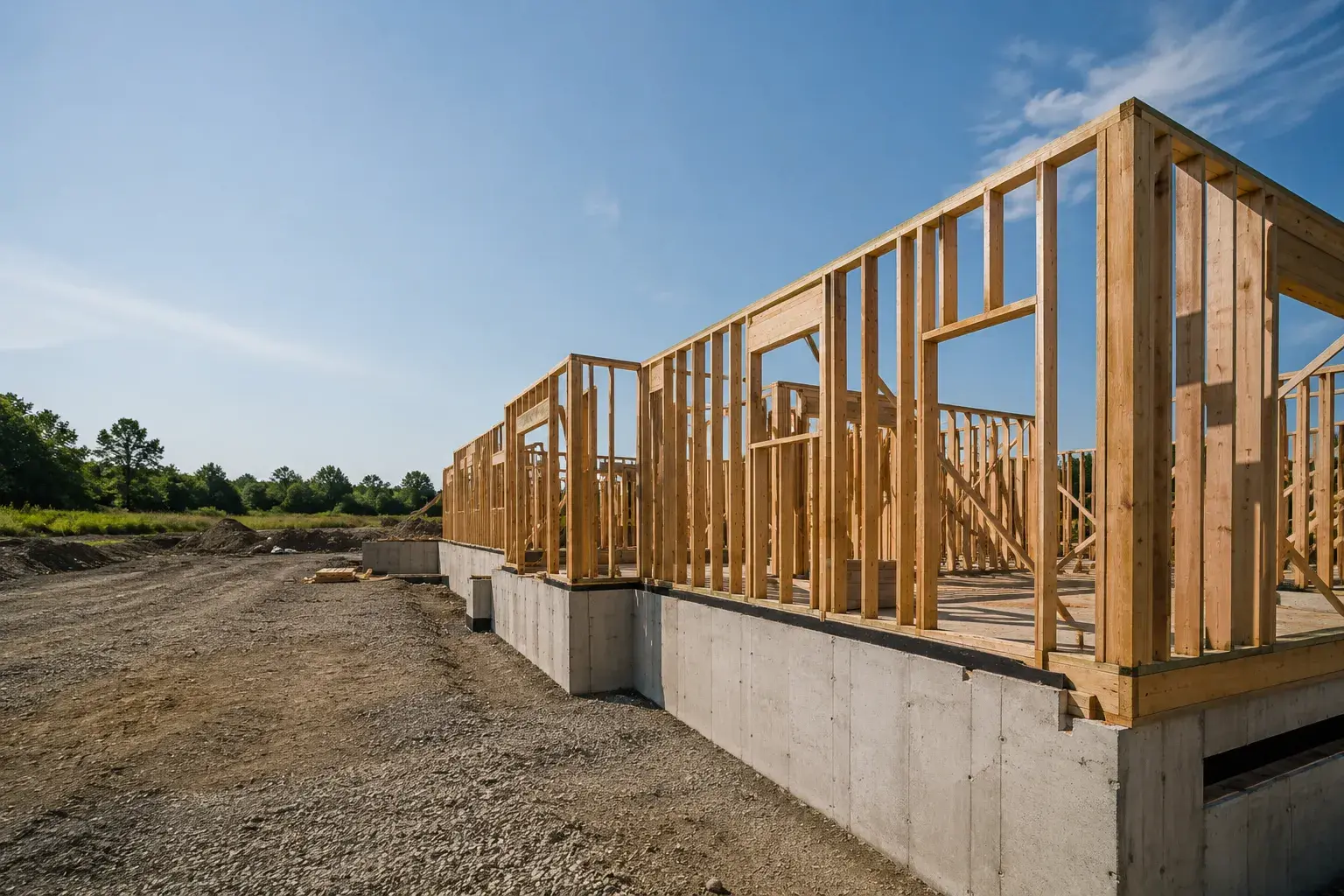
Framing lumber is chosen by matching a species group to the loads it carries, then selecting a grade that guarantees the strength and stiffness the structural drawings call for. For most GTA wall, floor, and roof work, kiln-dried No.2 SPF is the standard, while Douglas Fir-Larch or Southern Yellow Pine steps in where beams, headers, and long spans demand higher fibre stress. The grade stamp on every piece tells you the species group, grade, moisture content, and mill, and that stamp is what an OBC inspector and your engineer actually rely on.
On a working site those two decisions, species and grade, control almost everything: how far a joist can span, how much a stud can carry, and whether a piece is even legal to leave in the wall. Below is how we approach lumber selection as a licensed, insured, WSIB-covered framing crew across the GTA and Golden Horseshoe.
Common Framing Species and Where Each Fits
Structural lumber in Canada is sold by species group, not by a single tree. Grouping combines species with similar strength so the design values printed in the OBC and the span tables stay consistent. The four you will meet most often on GTA jobs are SPF, Douglas Fir-Larch, Southern Yellow Pine, and Hem-Fir.
- SPF (Spruce-Pine-Fir): The default Canadian framing lumber. Light, straight, easy to nail, and priced to move. It is what fills most wall plates, studs, and standard joists.
- Douglas Fir-Larch (DF-L): Denser and stiffer than SPF, with higher bending and compression values. We reach for it on headers, posts, beams, and long-span joists where SPF would need a deeper or doubled member.
- Southern Yellow Pine (SYP): Very strong and heavy, holds fasteners exceptionally well, and takes pressure treatment readily. Common in treated applications and engineered situations rather than everyday wall framing here.
- Hem-Fir: A middle ground between SPF and DF-L. Good strength, paints and treats well, and shows up regionally when supply favours it.
| Species group | Relative strength/stiffness | Relative cost | Typical use |
|---|---|---|---|
| SPF | Moderate | Lowest | Studs, plates, standard floor and roof joists |
| Douglas Fir-Larch | High | Higher | Headers, beams, posts, long-span joists |
| Southern Yellow Pine | High, very dense | Higher | Pressure-treated members, high-load framing |
| Hem-Fir | Moderate to high | Mid | General framing, treated and painted work |
Species is only half the story. Two pieces of DF-L can carry very different loads depending on their grade, which is where the grading rules come in.
Grade Categories: Select Structural Down to Stud
Every dimensional piece is visually or machine graded and sorted into a category that carries specific design values. Knots, slope of grain, splits, and wane all push a board down the ladder. From strongest to most economical:
- Select Structural (SS): The top visual grade, tightest defects, highest allowable stress. Used where the engineer specifies it, often in critical beams and heavily loaded members.
- No.1: Strong and clean, a common call-out for joists and rafters carrying real load.
- No.2: The workhorse of residential framing. Most floor and roof span tables and most stud walls are built on No.2, and it is what we spec unless the drawings say otherwise.
- Construction and Standard: Utility-oriented light framing grades for shorter, lower-load pieces.
- Stud: A grade optimized for vertical wall members, controlling for straightness and end use in stud walls rather than long-span bending.
A quick rule from the field: if a wall is just holding itself and normal loads, Stud or No.2 SPF is fine. The moment a member spans far or carries a point load, you move up to No.1, SS, or a stronger species, or over to engineered lumber for beams and long spans where solid sawn stops being practical.
How to Read a Grade Stamp
Every graded piece carries an ink stamp, and reading it takes about three seconds once you know the five parts:
- Grading agency: The certification mark of the agency (such as an NLGA-accredited body) that oversees the mill.
- Mill number: Identifies which sawmill produced and graded the piece.
- Grade: The category, for example “No.2,” “SEL STR,” “STUD,” or “CONST.”
- Species group: The abbreviation, such as “S-P-F,” “D FIR-L,” “HEM-FIR,” or “S-P-Sib.”
- Moisture condition: How the wood was seasoned when graded, “S-DRY” or “KD” for kiln-dried at 19 percent or less, “S-GRN” for green (surfaced above 19 percent), “MC15” or “KD-HT” for 15 percent and heat treated.
If a piece has no legible stamp, treat it as ungraded. An inspector can reject unstamped structural lumber, and we will not build load-bearing assemblies with it. The stamp is the paper trail that lets your framing pass inspection under the OBC.
Kiln-Dried vs Green and Moisture Content
Moisture content changes as wood dries, and wood shrinks as it loses moisture. That shrinkage is why moisture content matters as much as grade on a finished job.
- Green (S-GRN): Surfaced above 19 percent moisture. Heavier, and it will shrink and can twist, cup, or check as it dries in place. Cheaper, but you inherit the movement.
- Kiln-dried (KD, S-DRY): Dried to 19 percent or less before it ships. More dimensionally stable, lighter to handle, and far less likely to leave you with nail pops, drywall cracks, and squeaky floors months later.
For anything that finishes tight to drywall, flooring, or trim, we frame in kiln-dried stock. The small premium is cheaper than the callbacks from a floor system that shrinks after the finishes go on. On a renovation, where new framing ties into decades-old dry lumber, matching to kiln-dried is even more important so the old and new move together. That is a detail we watch closely on every renovation framing project.
Pressure-Treated for Ground Contact and Exposure
Untreated framing lumber belongs indoors and dry. Anywhere wood meets soil, concrete, or persistent moisture, it needs pressure treatment rated for the exposure:
- Ground contact: Sill plates on foundations, deck posts, and any member touching or near soil. Use lumber rated specifically for ground contact, not the lighter above-ground rating.
- Above ground: Deck framing, exposed exterior members, and ledgers that shed water but still see the weather.
- Fasteners and connectors: Modern treatment chemistry is corrosive to plain steel, so we pair treated lumber with hot-dipped galvanized or stainless fasteners and rated connectors. Mismatched hardware is a common failure we catch on other people’s decks.
SYP and Hem-Fir take treatment well, which is why so much treated stock is one of those species. Under the OBC, the sill plate sitting on your foundation must be treated or separated from the concrete, and we detail that on every build.
Matching Grade and Species to the Structural Job
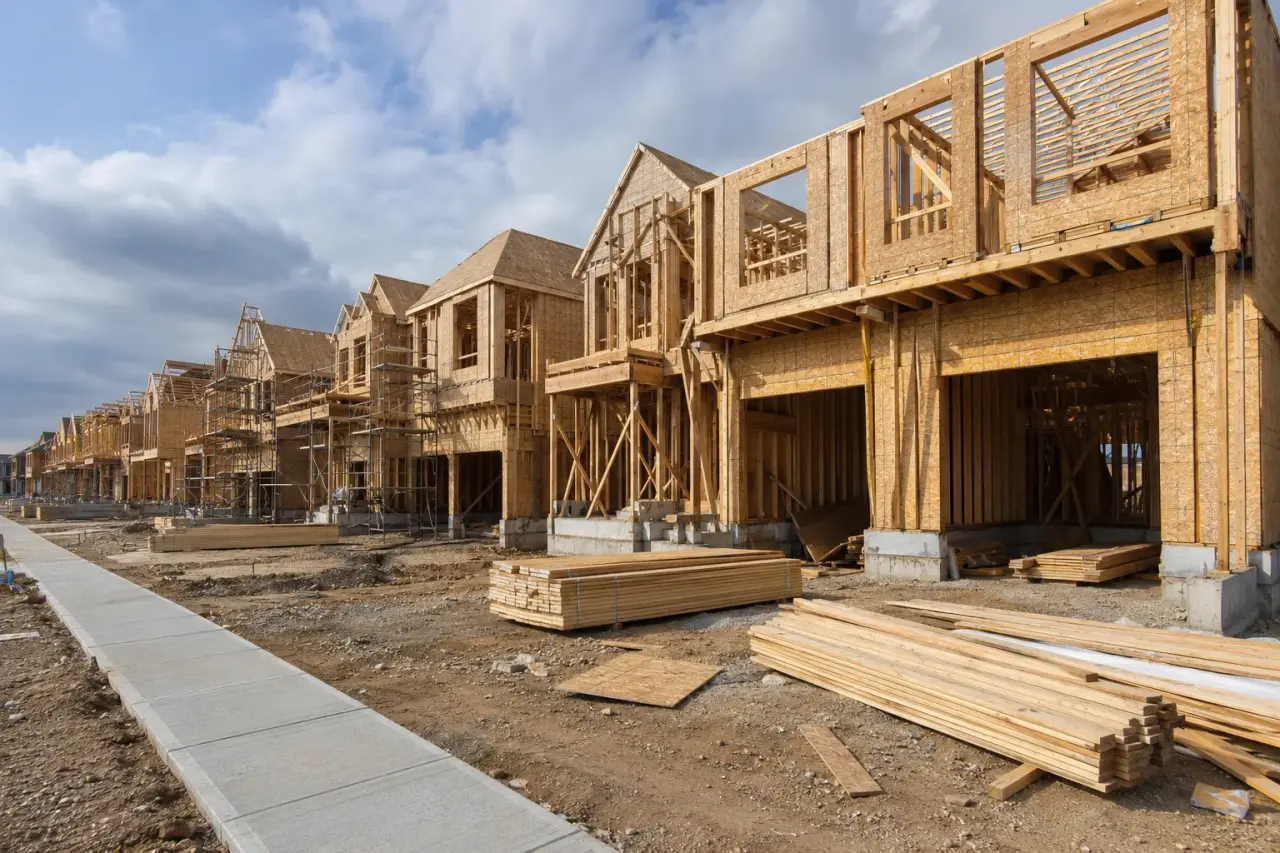
Pulling it together, the selection logic on our sites runs like this:
- Ordinary walls, standard floor and roof spans: Kiln-dried No.2 or Stud SPF. Economical, code-compliant, and what the residential span tables assume.
- Longer joist and rafter spans, heavier live loads: Move up to No.1, jump to a stiffer species like DF-L, or reduce spacing. Stiffness (deflection), not just strength, usually drives this call.
- Headers, beams, posts, and point loads: DF-L or SYP in No.1 or Select Structural, or engineered members where solid sawn cannot span it cleanly.
- Anything touching moisture or ground: Correctly rated pressure-treated lumber with matched hardware.
The drawings and the engineer set the requirement; our job is to hit that spec exactly, verify every stamp on delivery, and never quietly substitute a lower grade or weaker species to save a few dollars. Whether it is a custom home framing package or a load-bearing wall removal, the lumber that goes in is the lumber the design called for. If you are weighing materials at a higher level, our comparison of wood vs steel framing covers where each system earns its place.
Frequently Asked Questions
What grade of lumber is used for most house framing? Kiln-dried No.2 SPF is the standard for typical residential walls, floors, and roofs in the GTA. Most span tables and stud-wall assumptions in the OBC are built around No.2, so it is the baseline unless your drawings specify a higher grade or a stronger species.
Is Douglas Fir stronger than SPF? Yes. Douglas Fir-Larch has higher bending, compression, and stiffness values than SPF, which is why we use it for headers, beams, posts, and long-span members. For ordinary walls and standard spans, SPF is plenty and more economical.
What does S-DRY or KD mean on a lumber stamp? Both mean the piece was seasoned to 19 percent moisture content or less. “KD” is kiln-dried and “S-DRY” means surfaced dry. Kiln-dried lumber is more stable and far less prone to shrinking, twisting, and later nail pops than green (S-GRN) stock.
When do I need pressure-treated lumber? Anywhere the wood contacts soil, concrete, or ongoing moisture: sill plates, deck posts, deck framing, and exterior members. Match the treatment rating to the exposure (ground contact versus above ground) and use hot-dipped galvanized or stainless hardware so the treatment chemistry does not corrode your fasteners.
Getting species, grade, and moisture right is the difference between a structure that stays quiet and square and one that shrinks, sags, or fails inspection. As a licensed, insured, WSIB-covered framing contractor serving the GTA and Golden Horseshoe, Timberr specs and installs the exact lumber your project and the OBC require, and we verify every grade stamp before it goes in the wall. Ready to build it right? Get in touch through our contact page and let’s talk about your framing.