
LVL vs Glulam Beams: Which Engineered Beam Is Right for Your Ontario Build
LVL vs glulam beams compared for GTA framing: how each is made, where they outperform, spans and appearance, cost, moisture and exposure, and how to pick the right beam for your project.
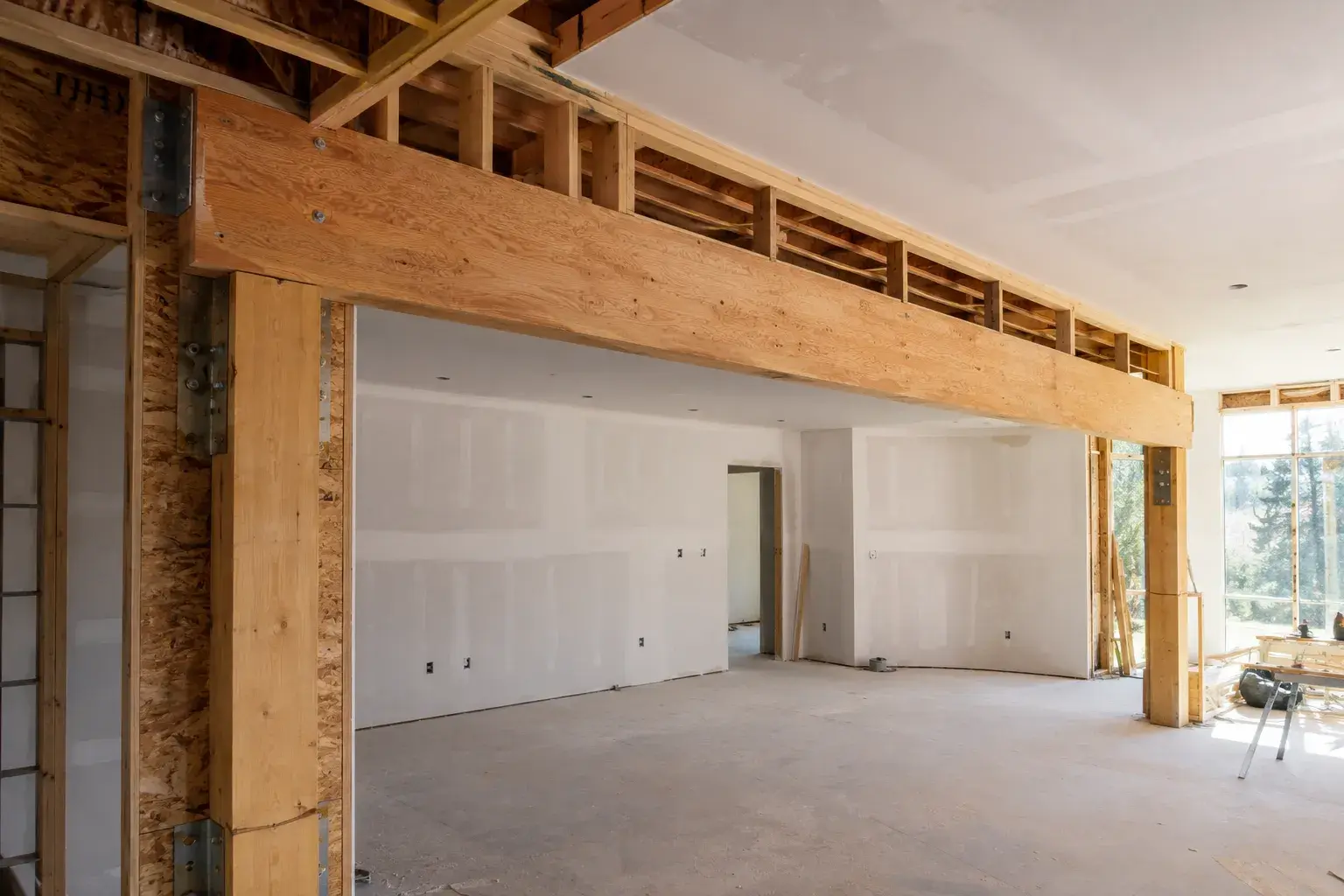
TL;DR: LVL (laminated veneer lumber) and glulam (glue-laminated timber) are both engineered beams that outperform solid lumber, but they solve different problems. Choose LVL for concealed structural beams, headers, and multi-ply built-up beams inside walls and floors where strength and a shallow depth matter and the beam will be hidden. Choose glulam when the beam is exposed and appearance counts, when you need long curved or tapered members, or when a single large section is easier to install than a built-up LVL. Both must be sized to the Ontario Building Code and the manufacturer’s span tables for your specific loads.
At Timberr Framing we install engineered beams on nearly every custom home, addition, and load-bearing wall removal we frame across the GTA and the Golden Horseshoe. LVL and glulam are the two products builders ask about most, and the choice is not just about strength numbers. It is about where the beam lives, whether anyone will see it, how it gets into the building, and what it costs. Here is how the two compare and how we decide.
How Each Beam Is Made
The manufacturing method drives everything about how these beams behave.
- LVL (laminated veneer lumber) is built from thin wood veneers, roughly 3 mm thick, peeled from logs and glued together with all the grain running the same direction along the length of the beam. The result is a dense, uniform, straight member with very high and very predictable strength. LVL comes in standard depths (9.25, 11.25, 14, 16, 18 inches and more) and a fixed thickness, usually 1.75 inches, so wider beams are built up from two, three, or more plies bolted or nailed together.
- Glulam (glue-laminated timber) is built from dimensional lumber laminations, typically 38 mm boards, stacked flat and glued into a solid beam of almost any width and depth. Because the laminations are bent before gluing, glulam can be manufactured straight, cambered, curved, or tapered. It arrives as one solid piece rather than a built-up stack.
Both are true engineered products with tested, published capacities. Neither twists, cups, or shrinks the way a solid sawn timber does as it dries, which is the core reason we reach for them over old-growth solid beams.
Strength, Span, and Depth
For a concealed beam of a given depth carrying a given load, LVL usually offers the highest strength for the least depth. That matters when a beam has to fit inside a floor system or above a wide opening without dropping below the ceiling line. A multi-ply LVL beam is often the shallowest way to carry a heavy point load, which is why it dominates structural beam installation on renovations where headroom is tight.
Glulam competes on long spans and large single sections. Because it can be manufactured in almost any width and depth and shipped as one piece, glulam is efficient for long clear spans over great rooms, garages, and exposed ridge beams. When a beam has to be curved or tapered, glulam is the only realistic wood option.
| Factor | LVL | Glulam |
|---|---|---|
| Strength for a given depth | Very high, usually highest | High |
| Available widths | Fixed ply width, built up | Almost any width |
| Curved or tapered shapes | No | Yes |
| Delivered as | Multiple plies, assembled on site | One solid piece |
| Best concealed application | Headers, floor beams, point loads | Long single spans |
| Best exposed application | Rarely (industrial look) | Great rooms, ridge beams |
Treat depth and span as a design outcome, not a rule of thumb. Every beam has to be sized against the current OBC and the product’s span tables for your exact live and dead loads, spacing, and support conditions. For anything carrying real load, that sizing should be signed off by the beam supplier’s engineering or a structural engineer, which we cover in our guide to engineered lumber.
Appearance and Where the Beam Lives
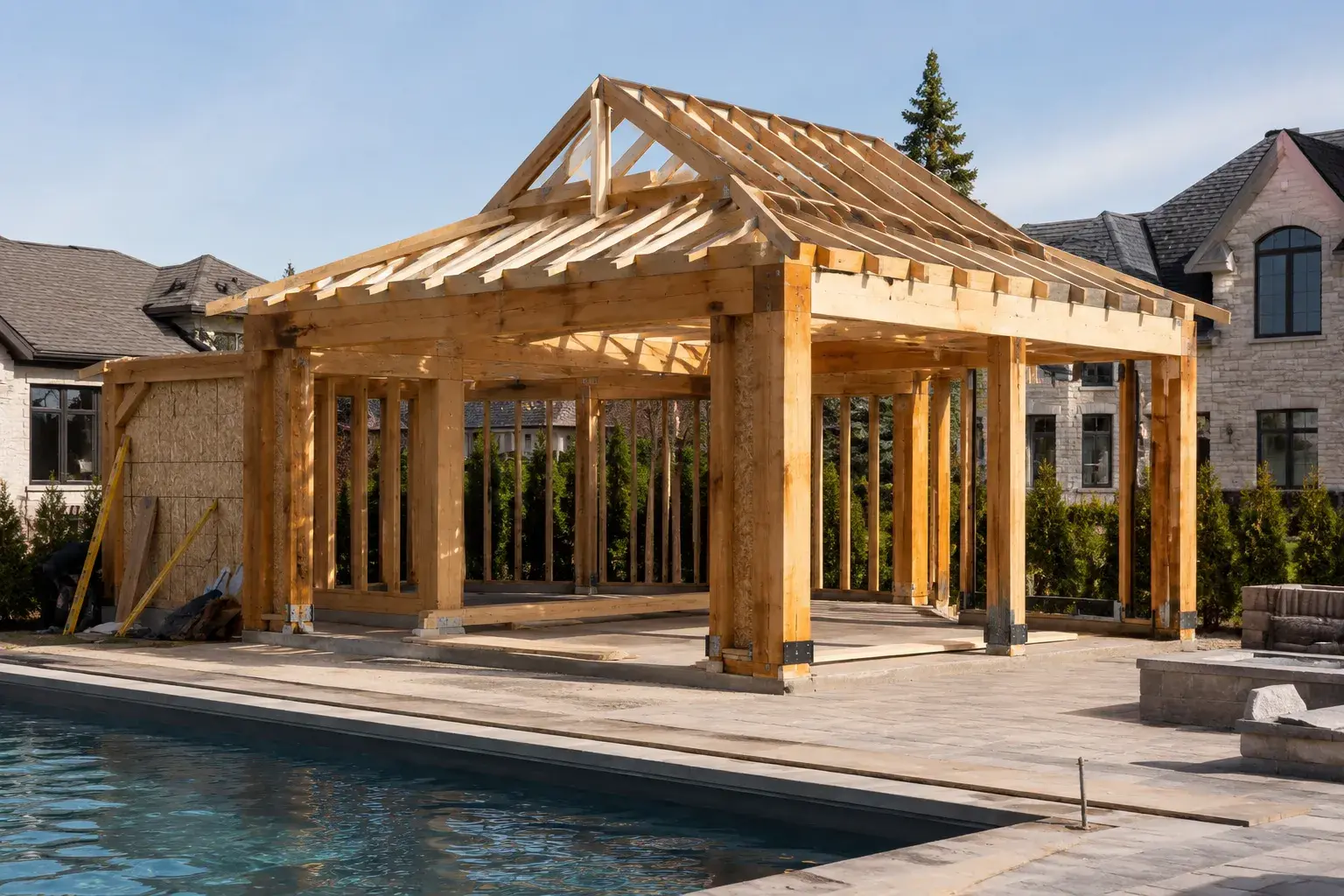
This is often the deciding factor. Ask one question first: will anyone see the beam?
- Concealed beam (inside a wall, above a ceiling, buried in a floor): LVL almost always wins. It is stronger for its depth, cheaper for hidden work, and its plain industrial edges do not matter when they are covered by drywall. Built-up LVL is the standard header and dropped-beam material.
- Exposed beam (a feature over an open living space, an exposed ridge, a timber-look great room): glulam wins. It reads as a clean, solid timber, takes stain and finish well, and does not show the nailed-together seams of a multi-ply LVL. If the beam is part of the room’s look, glulam is worth the premium.
We often use both in the same house: LVL for the hidden headers and floor beams, glulam for the one exposed beam the client actually sees. That is common on a custom home framing build with an open great room.
Cost
Per foot of comparable capacity, LVL is usually the more economical engineered beam, especially for concealed work, because it uses veneer efficiently and installs as standard plies. Glulam typically costs more, and custom shapes, long lengths, and appearance-grade finishes push that higher. But cost is not just the beam. A very long or very heavy single glulam can need a crane or extra labour to fly into place, while a built-up LVL can sometimes be carried in ply by ply and assembled in position. On tight urban lots common in the GTA, access can quietly decide the cheaper option.
Moisture and Exposure
Standard LVL and glulam are both interior products and are not rated for permanent exposure to weather or ground contact. If a beam will see moisture, a covered porch, an exposed exterior header, or a beam near grade, you need a product specifically manufactured and treated for that exposure, and the connections and flashing have to keep water off the end grain. Do not substitute an interior beam into an exposed location. For exterior structure such as deck and porch framing, the beam, its bearing, and its protection from water all have to be detailed for the outdoor condition.
How We Choose on a Real Job
Our decision usually runs like this:
- Is the beam exposed? If yes, and appearance matters, lean glulam. If no, lean LVL.
- How deep can the beam be? If headroom is tight, LVL gives the most capacity for the least depth.
- Is it curved, tapered, or a very long single span? That points to glulam.
- How does it get into the building? Tight access can favour a built-up LVL assembled in place; open access can favour a single glulam.
- What does the engineer or supplier size say? The final section is confirmed against the OBC and the manufacturer’s tables for your loads, not chosen by feel.
Frequently Asked Questions
Is LVL stronger than glulam? For a given depth, LVL typically offers the highest strength, which is why it is favoured for shallow, heavily loaded, concealed beams. Glulam is still very strong and wins on long single spans, large sections, and any curved or tapered shape. Neither is universally stronger; the right choice depends on the application, and both must be sized to the Ontario Building Code and the manufacturer’s tables.
Can I use LVL as an exposed beam? You can, but multi-ply LVL shows nailed or bolted seams and reads as an industrial product rather than a finished timber. For a feature beam people will look at, glulam or a wrapped assembly usually looks far better. If the LVL will be hidden by drywall, appearance does not matter.
Which beam is cheaper, LVL or glulam? For concealed structural work, LVL is usually more economical per foot of capacity. Glulam generally costs more, especially in appearance grade or custom shapes, but a single glulam can sometimes save labour compared with assembling a heavy multi-ply LVL, and installation access can change the math.
Do engineered beams need a structural engineer? Any beam carrying real load, such as a beam replacing a bearing wall or spanning a wide opening, should be sized by the supplier’s engineering or a structural engineer and confirmed against the OBC. A licensed framer installs to that spec; we do not guess beam sizes on load-bearing work.
Get the Right Beam Specified and Installed
Choosing between LVL and glulam is a design decision, and installing either correctly, bearing, connections, and support posts down to solid footings, is where the load actually gets carried. If you are planning a build, an addition, or a wall removal anywhere in the GTA or the Golden Horseshoe, Timberr Framing will help you pick the right beam and install it to plan and the Ontario Building Code. We are licensed, insured, and WSIB-covered. Reach out through our contact page to talk through your beam and get a quote.