
Can You Frame a House in Winter in Ontario? What to Know Before You Build
Winter framing in Ontario explained: yes you can frame in the cold, how snow and frozen ground affect the schedule, moisture and lumber concerns, dry-in priorities, and how winter changes cost and timeline in the GTA.
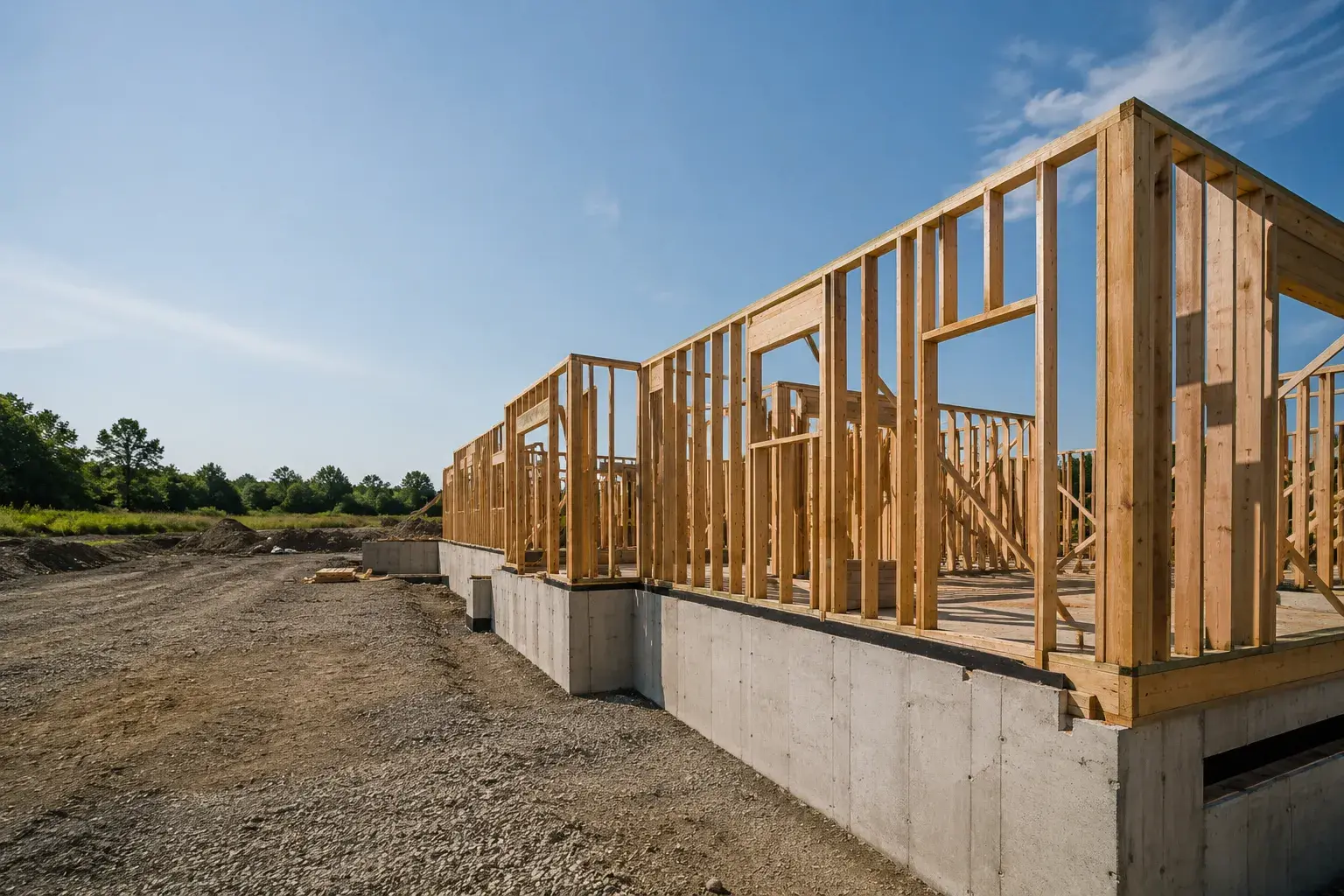
TL;DR: Yes, you can frame a house through the winter in Ontario, and many GTA builds do. Framing is not stopped by cold the way concrete and finishing are; crews work year-round. Winter mainly affects the schedule and the details: snow has to be cleared off decks and framing before sheathing, frozen or wet lumber must be managed, days are shorter, and getting the building dried in quickly matters even more. Winter framing can actually keep a project moving when other trades are slower, but it needs a crew that plans for the conditions.
Homeowners planning a build often assume everything shuts down for the winter. Framing does not. At Timberr Framing we frame through GTA winters every year, and a well-run winter framing job progresses steadily. What changes is not whether you can frame, but how you have to manage the cold, the snow, and the moisture. Here is what to know before you commit to a winter build.
Yes, You Can Frame in Winter
Framing is dry structural carpentry. Unlike concrete, which needs protection from freezing while it cures, or drywall mud and paint, which need heat to dry, framing lumber does not care about the cold in the way those materials do. A framing crew can cut, nail, and raise walls in freezing temperatures. Across the GTA and the Golden Horseshoe, winter framing is routine, and for many builds it is the phase that keeps a project moving while wetter trades wait.
The real questions are about conditions on site, not whether the work can be done at all.
How Snow and Ice Affect the Job
Snow is the biggest day-to-day factor in winter framing. It does not stop the work, but it has to be managed:
- Clear snow before covering anything. Snow and ice on a subfloor or on framing has to be removed before sheathing or the next layer goes on, or you trap moisture in the assembly. Framers sweep and clear decks before building on them.
- Watch footing and slip hazards. Ice on decks, ladders, and staging is a safety issue, so crews sand, clear, and slow down where needed.
- Access and delivery. Snow can complicate lumber deliveries and site access on tight urban lots, which can nudge the schedule.
None of this stops framing; it just means a competent crew builds snow-clearing into the daily routine rather than covering framing that has snow sitting on it.
Lumber, Moisture, and Frozen Ground
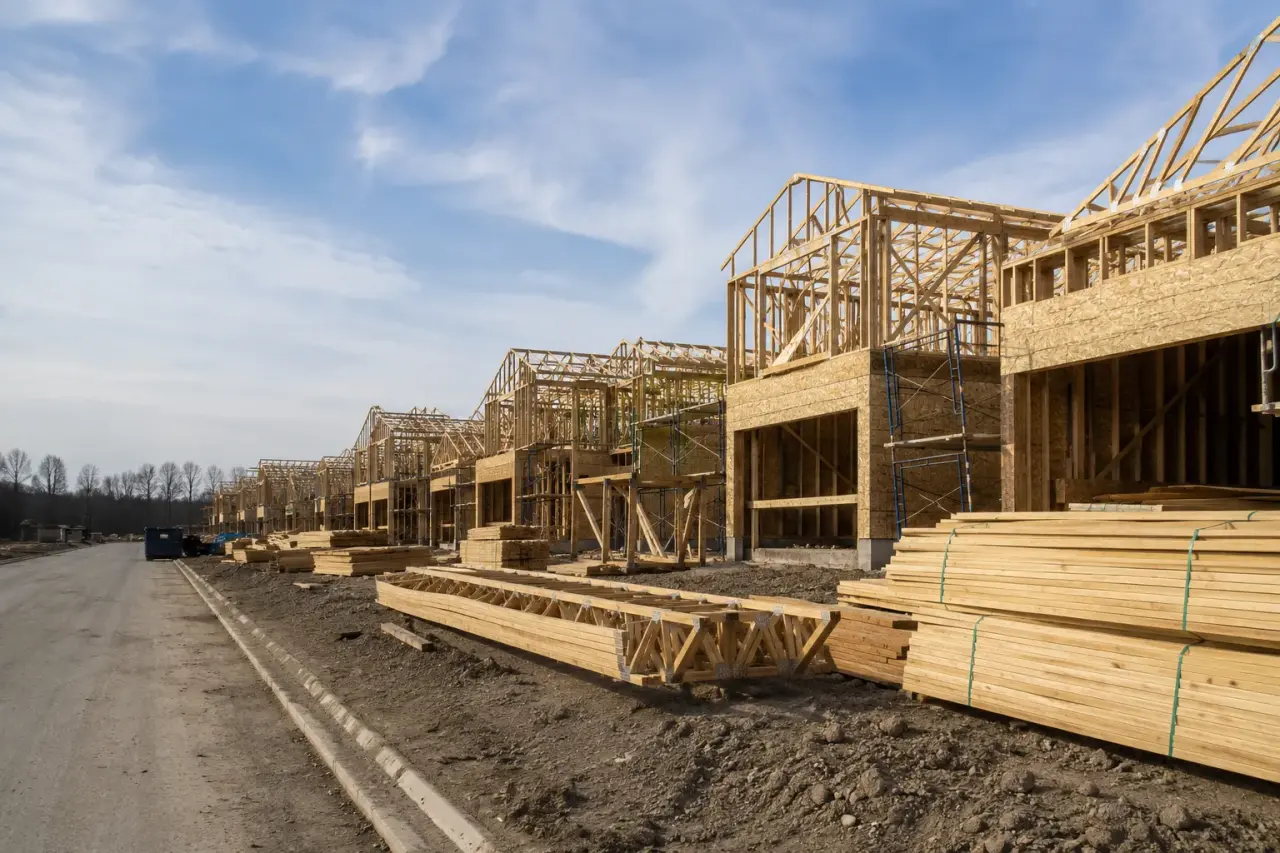
Cold weather changes how you handle materials and the site:
- Wet or frozen lumber. Lumber that has taken on water and then frozen needs to be managed. The concern is not the cold itself but building with lumber that is holding excess moisture, which can move as it dries later. Keeping material covered and off the ground matters more in winter.
- Drying and shrinkage. All framing lumber gives up moisture and moves somewhat as a building is heated after the envelope is closed. This is normal and is why we glue and screw subfloors and detail framing to tolerate it, the same practices covered in our floor framing and lumber grades and species guides.
- Frozen ground and foundations. Framing follows the foundation, and foundation and concrete work is the phase most sensitive to cold, since concrete must be protected from freezing while it cures. If your footings and foundation are going in during deep winter, that phase, not the framing, is where cold-weather protection and cost come in.
The key winter mindset is simple: keep water out of the assembly, and dry the building in as fast as possible.
Dry-In Is the Winter Priority
In any season, the goal of framing is to get the building “dried in”, walls and roof sheathed and wrapped so the interior is protected from weather. In winter that priority sharpens. Once the sheathing and house wrap are on and the roof is covered, the structure sheds snow and rain, and temporary heat can be introduced for the trades that follow. A winter framing crew works to close the envelope quickly so the rest of the build can proceed in a protected, heatable shell.
This is the same dry-in logic that governs exposed work like a second-storey addition, and it is why sequencing matters so much in cold months.
How Winter Changes Cost and Timeline
Winter does not usually stop framing, but it can affect the schedule and, indirectly, cost:
- Shorter days. Fewer daylight hours in December and January mean fewer productive hours per day, which can stretch the framing timeline somewhat.
- Snow-clearing time. Time spent clearing decks and staging is time not spent framing, so a snowy stretch can slow progress.
- Weather days. Severe storms or extreme cold can cost occasional days, though framing pushes through conditions that halt other trades.
- Foundation costs. If concrete work happens in deep winter, cold-weather protection for the pour can add cost, but that is the foundation contractor’s scope, not framing.
On the other side, winter can be a good time to build: framing crews and suppliers are often less stretched than in peak summer, and getting framed and dried in over winter positions the project for interior work as the weather warms. For how framing timelines are built in general, see our how long to frame a house guide, and for cost drivers, our framing cost in the GTA guide.
Should You Frame in Winter?
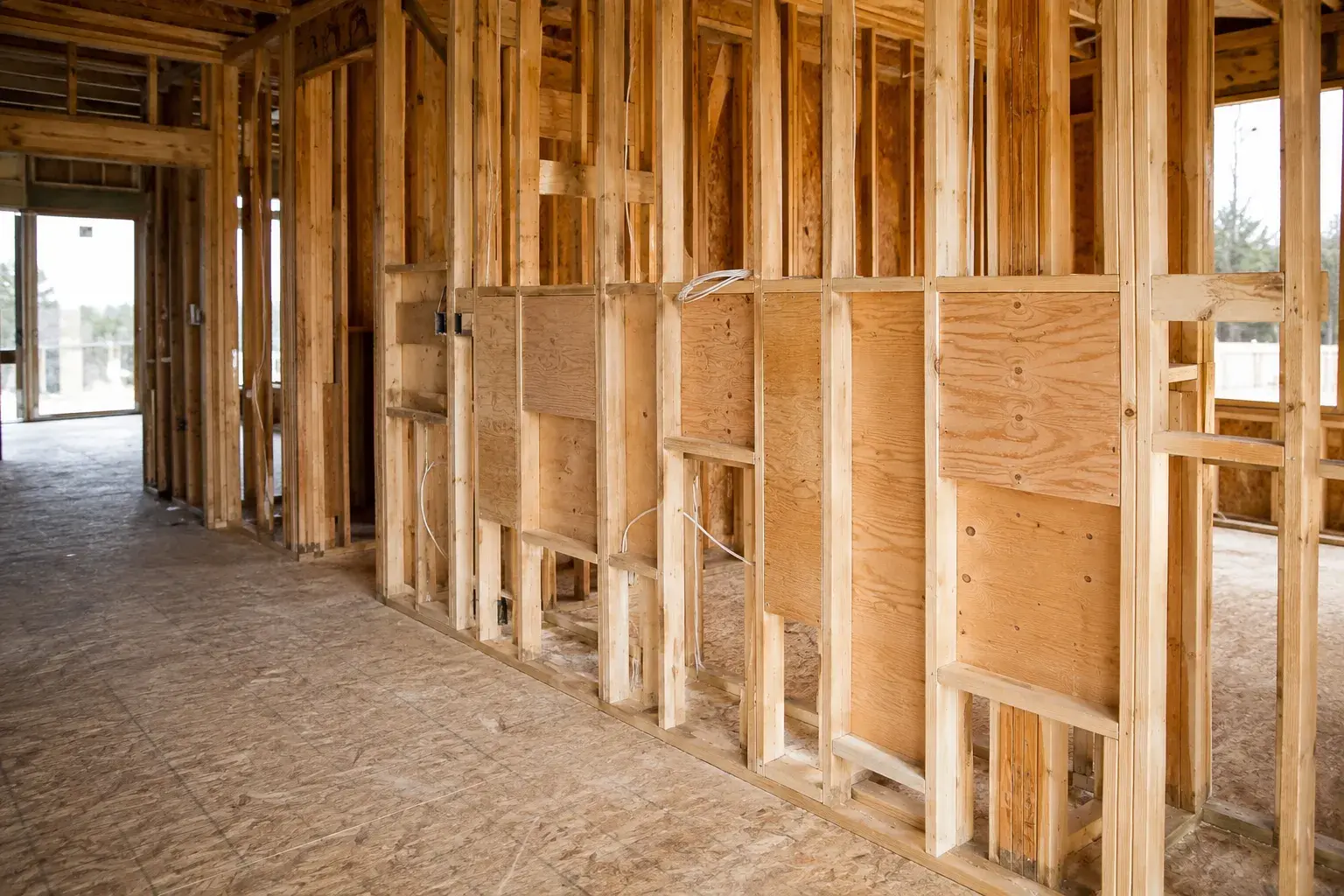
For most GTA projects, framing in winter is entirely reasonable and often smart. The decisions that matter are:
- Is your foundation already in, or does concrete work fall in the coldest weeks?
- Can the crew keep material covered and decks clear?
- Is the plan to dry the building in quickly so the shell can be heated?
If the answer to those is yes, winter framing keeps your build moving through months when a lot of other work slows down. What you want is a crew that plans for the cold rather than one that treats winter as an excuse for delays.
Frequently Asked Questions
Can you frame a house in the winter in Ontario? Yes. Framing is dry structural carpentry and crews work through Ontario winters routinely. Cold does not stop framing the way it affects concrete curing or finishing. Winter mainly affects the schedule, snow clearing, shorter days, and material handling, rather than whether the work can be done.
Does snow ruin framing? No, as long as it is managed. Snow and ice must be cleared off subfloors and framing before sheathing or the next layer is installed, so moisture is not trapped in the assembly. Framers sweep and clear decks before building on them; snow left uncovered on framing is the problem, not framing in snowy weather itself.
Is it more expensive to frame in winter? Framing labour itself is not dramatically more expensive, but winter can stretch the schedule through shorter days, snow clearing, and occasional weather days, which can add cost indirectly. The bigger cold-weather cost is usually foundation and concrete work, which needs protection from freezing while it cures.
Should I wait until spring to frame? Not necessarily. Winter framing keeps a project moving while wetter trades wait, and crews and suppliers are often less stretched than in summer. If your foundation is in and the crew plans to dry the building in quickly, framing through winter is a sound choice for many GTA builds.
Build Through the Winter With a Crew That Plans for It
Winter does not have to stall your project. If you are planning a build, addition, or renovation anywhere in the GTA or the Golden Horseshoe and want to keep moving through the cold months, Timberr Framing frames year-round, managing snow, moisture, and dry-in so your build stays on track and on the Ontario Building Code. We are licensed, insured, and WSIB-covered. Reach out through our contact page to talk through your timeline and get a quote.